Unified Observability: What It Is and Why It Matters for Large Enterprises

david.arrowsmith • December 29, 2025

Modern enterprises operate within a digital ecosystem of staggering complexity - spanning on-premises systems, private and public clouds, APIs, containers and SaaS platforms. Business-critical services often rely on a mix of legacy infrastructure and modern applications, each producing huge volumes of metrics, log messages, traces and events.
 

Maintaining service availability and performance in this environment is an ongoing challenge, typically handled through fragmented monitoring tools and domain-specific dashboards that provide a partial view at best.

Defining Unified Observability

Unified Observability bridges these silos by consolidating data from across infrastructure, applications, networks and user experience into a single, correlated view. It moves beyond traditional monitoring to deliver end-to-end visibility of business services - from the underlying technical components to customer impact.
 

This approach transforms raw telemetry into actionable insights that link IT performance directly to business outcomes.


The Challenges Unified Observability Tackles


The core challenge Unified Observability addresses is fragmentation. In many large enterprises, multiple monitoring tools generate overlapping data that obscures the root cause of incidents. 


Unified Observability uses correlation, analytics, and automation to cut through noise, reduce duplicated alerts, and connect performance anomalies with the business services they affect. It also supports proactive incident detection, enabling IT Operations (ITOps) teams to predict and mitigate issues before they impact users or revenue.


Key Characteristics and Features

A robust Unified Observability solution features:

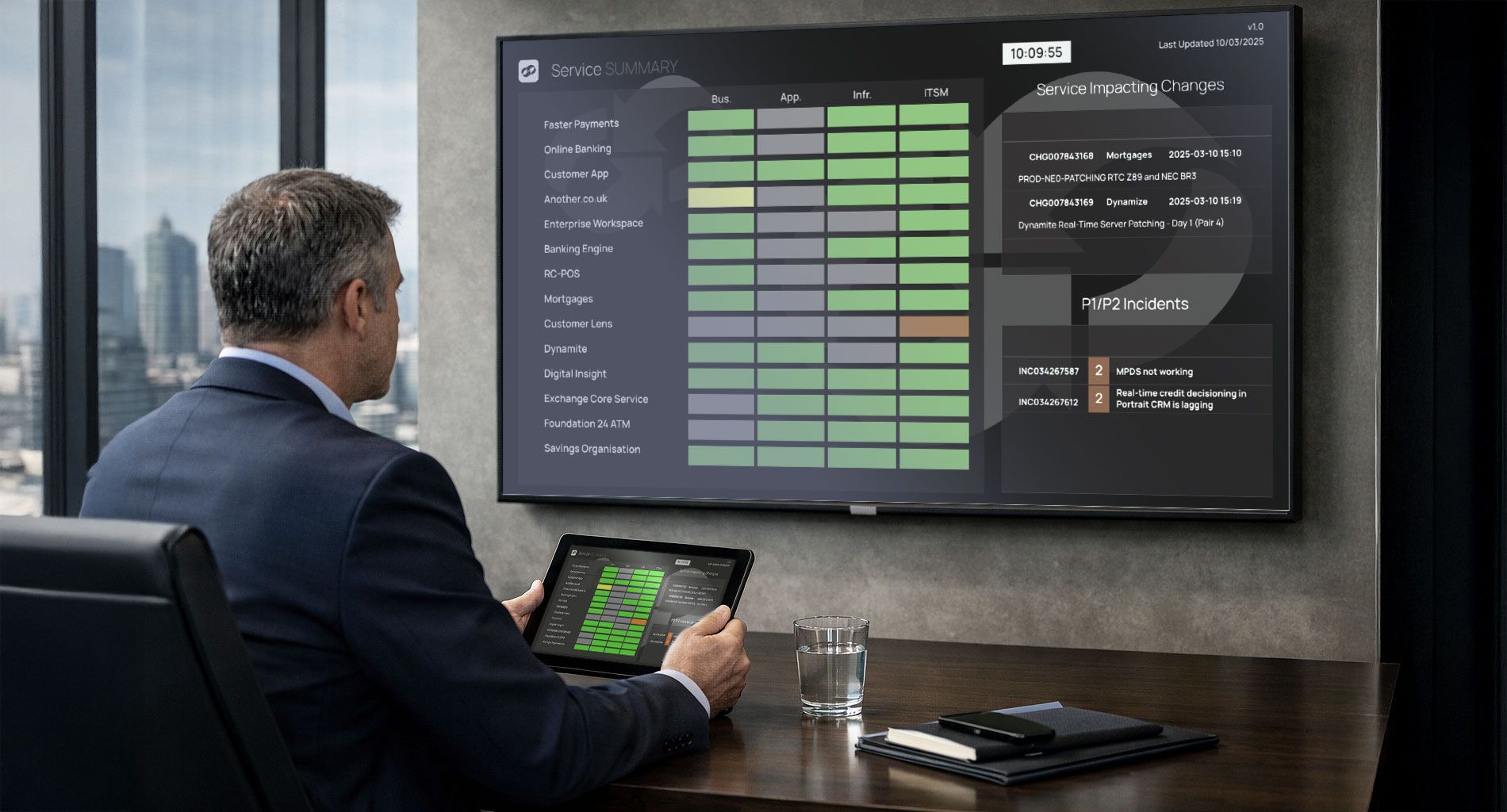
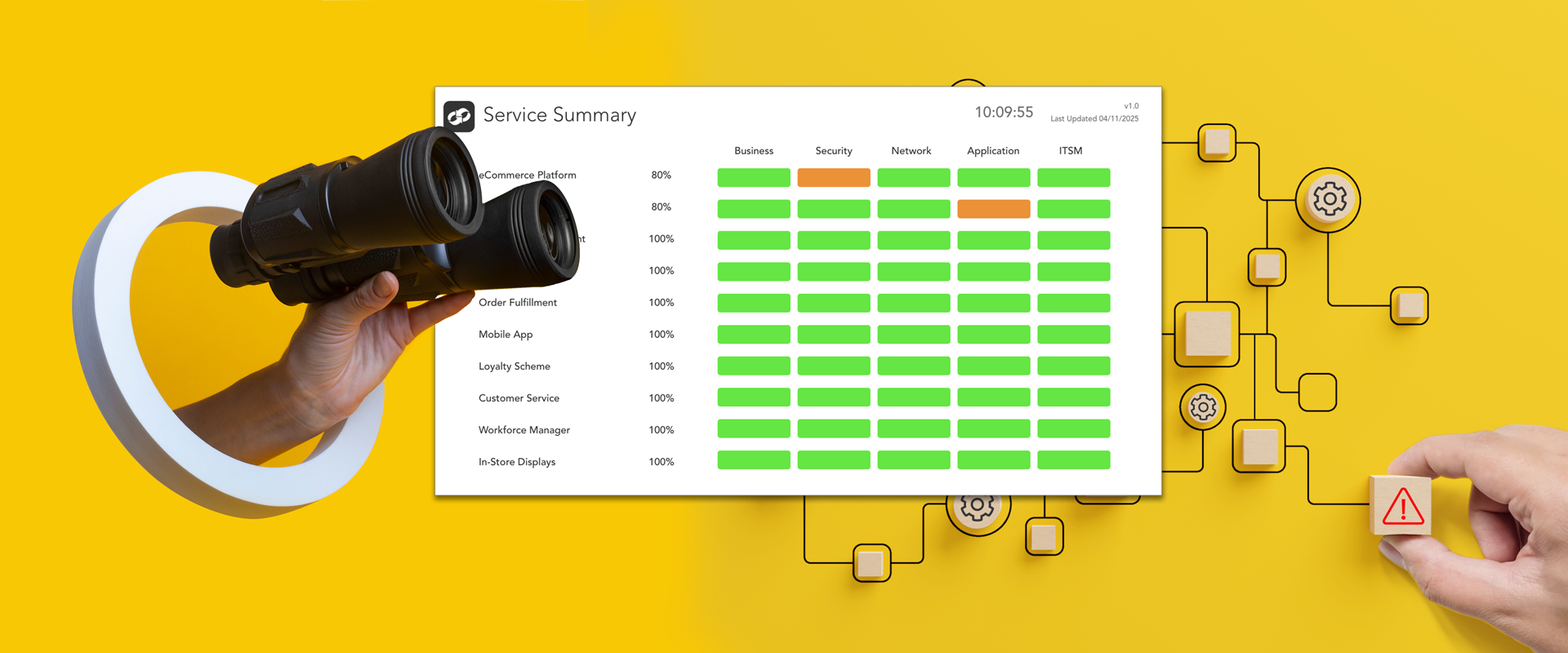
  • A single pane of glass: Unified, real-time dashboards providing both technical and business views of service health
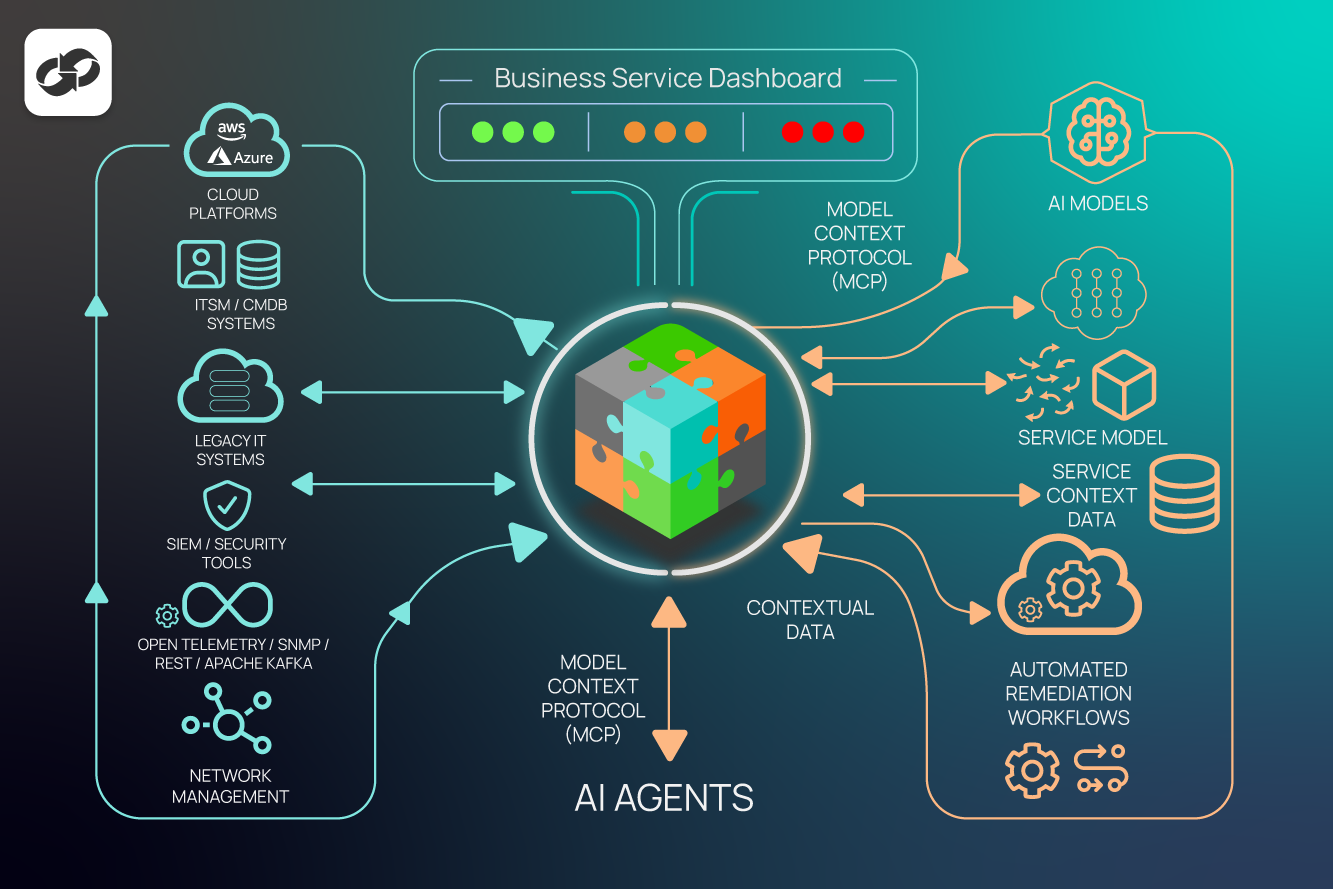
  • Advanced analytics and AI: Machine learning, fuzzy matching and knowledge graphs to infer relationships and automate root cause analysis
  • Open data integration: Seamless ingestion from monitoring tools, ITSM platforms, SIEM systems and OpenTelemetry pipelines
  • Automated remediation: Intelligent workflows that accelerate resolution and improve mean time to repair (MTTR)


The Benefits of Unified Observability for Large Enterprises


By delivering a holistic view across hybrid and cloud environments, Unified Observability enables large enterprises to:


  • Infer the health of Business Services from multiple perspectives - infrastructure, security, end-user and ITSM
  • Reduce incident volume typically by around 50% through proactive detection and automation
  • Improve collaboration between ITOps, DevOps and SecOps teams with shared context and real-time dashboards
  • Make data-driven business decisions through correlated IT and business metrics


Why Interlink Is Well Placed to Deliver Unified Observability

Interlink delivers Unified Observability the way large enterprises need it: real time, service aligned and integrated across every domain, from modern, right through to legacy applications and infrastructure. 


The Interlink platform correlates events, metrics and topology using machine learning and knowledge graphs to surface only meaningful incidents. 


Universal integration brings together
SIEM, cloud and legacy tools without disruption. With Service Chain Mapping for resilience, low code automation and a Generative AI Assistant for explainable insights, the Interlink platform is built to align IT performance with the priorities of your business and its customers.

Contact Interlink to discuss your Service Observability needs.
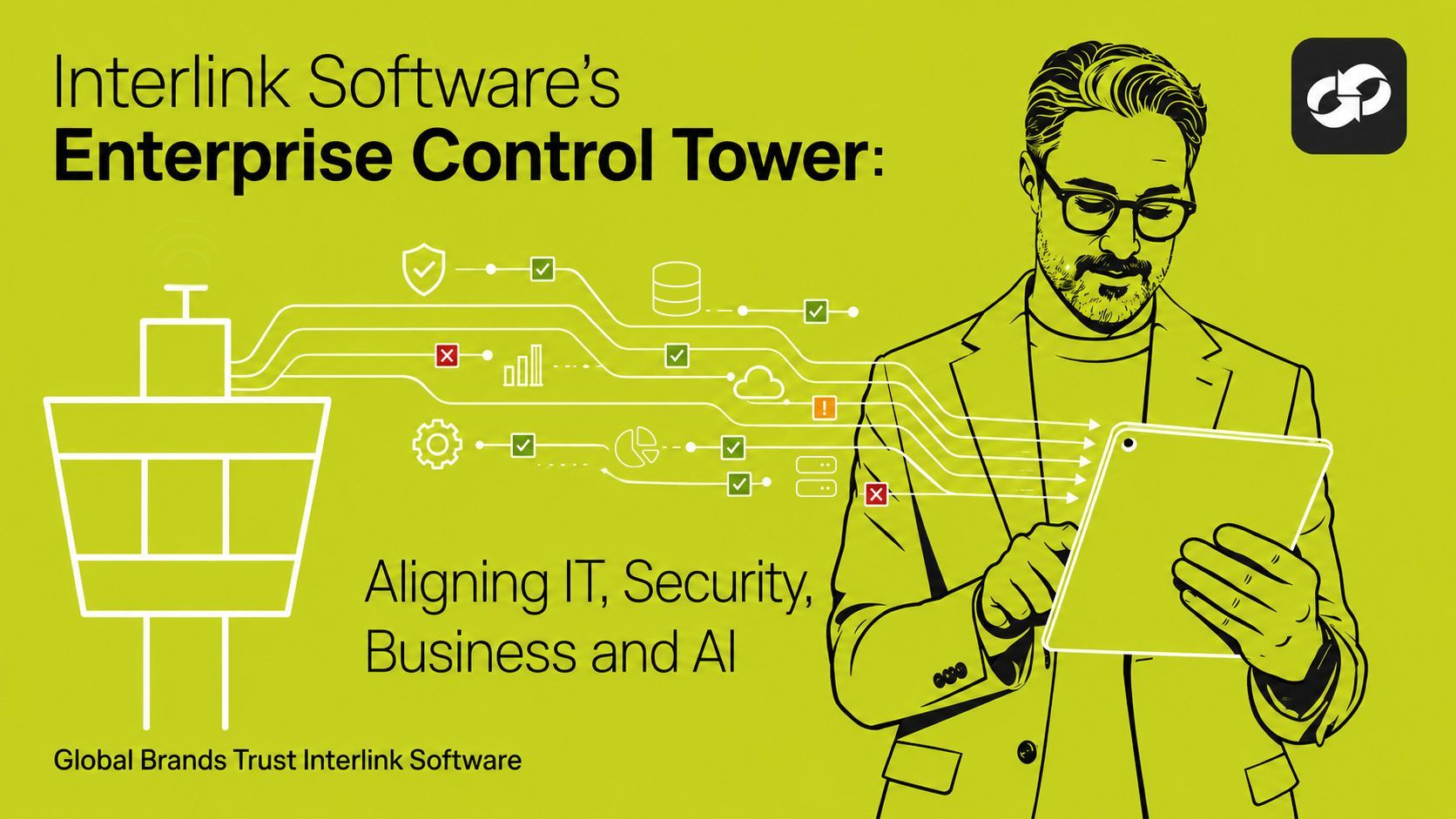
Why Intelligent Data Fabric Architectures Matters Now
By david.arrowsmith November 25, 2025
Learn how an intelligent data fabric unifies machine data, strengthens security and delivers timely insight to improve resilience and decision-making
Service Observability, Service Operations and Service Orchestration: Unifying Visibility and Action
By david.arrowsmith November 7, 2025
Interlink Software’s AIOps platform unifies observability, operations and orchestration to predict, prevent and resolve incidents faster across the enterprise.
Observability Intelligence and Control Layer
By david.arrowsmith October 27, 2025
From fragmented hybrid environments to gaps in data quality. Interlink eliminates the blind spots with Integration Hub.
Service Observability for Modern Enterprises
By david.arrowsmith September 17, 2025
With Interlink’s Service Observability Platform, enterprises prevent IT incidents, speed RCA and link performance visibility to business goals.
By david.arrowsmith September 2, 2025
Single pane of glass monitoring solutions from Interlink Software, enables IT Ops and Observability Professionals to work in collaboration with shared data utilising the same view.
iverse team of IT developers collaborates late at night in a modern office, reviewing IT systems
By david.arrowsmith August 19, 2025
Discover the key differences between Event Intelligence Solutions and AIOps, when to use each, and how they shape enterprise IT operations.
By david.arrowsmith July 22, 2025
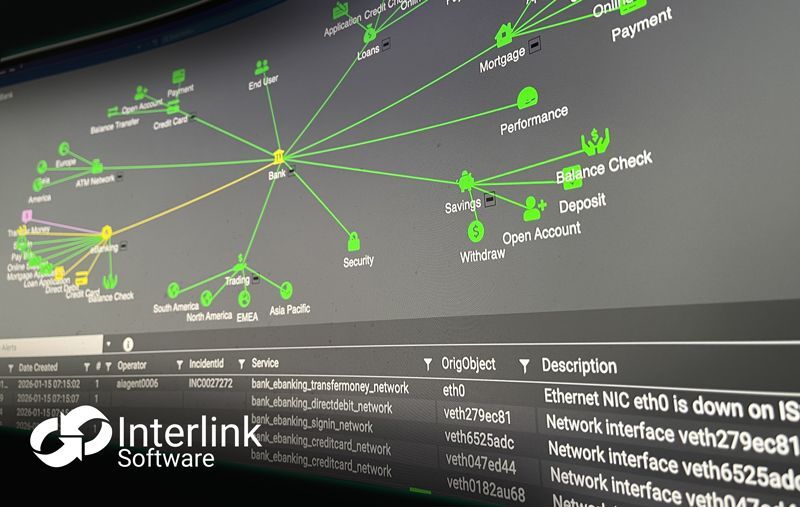
Banks and financial institutions operate in one of the most complex, highly regulated and risk-averse industries.
Enterprise IT Team working in office
By david.arrowsmith July 17, 2025
Discover the 5 essential capabilities of modern Event Intelligence Platforms—AI-driven tools for real-time analysis, correlation, and response automation.
AI-Powered Observability for ITOps | Interlink Software
By david.arrowsmith June 27, 2025
ITOps managers must ensure always-on availability across complex ecosystems, despite event storms, toolchain sprawl and slow root cause analysis - Learn more.
By david.arrowsmith October 3, 2024
In today’s competitive and fast-paced retail environment, service availability is paramount to delivering exceptional customer experiences. As an ITOps Manager or Site Reliability Engineer in a large retail enterprise, you're tasked with managing complex, interdependent systems that support vital business functions such as supply chain operations, point-of-sale (POS) systems, and inventory management. Maintaining a resilient IT infrastructure isn’t just an operational need—it's essential for preserving customer satisfaction and protecting your brand’s competitive edge. Retail IT professionals face numerous challenges, including managing an ever-growing number of endpoints, ensuring seamless integration between legacy and modern systems, and reacting swiftly to potential failures that could lead to downtime. These issues are further amplified during high-traffic periods like holiday seasons or sales events, where even a minor disruption can have a major impact on both revenue and customer loyalty. The Solution: Interlink Software’s AIOps and Business Service Observability Platform. Interlink Software’s AIOps and Business Service Observability platform addresses these challenges head-on, offering a unified, real-time view of your entire IT ecosystem. This comprehensive oversight empowers teams to proactively manage incidents, preventing disruptions before they can affect business operations. Powered by advanced machine learning, Interlink’s platform delivers real-time predictive insights that allow IT teams to detect and resolve potential issues before they escalate. This predictive capability means you're no longer reacting to problems after they’ve impacted service; instead, you’re staying ahead of risks, ensuring optimal system performance and reliability. By consolidating data across all IT systems, the platform integrates seamlessly with your existing tools, enabling you to monitor the health and performance of the entire IT infrastructure in one place. From POS systems to eCommerce platforms, this holistic view eliminates blind spots and ensures that critical systems remain operational. Minimize Downtime and Maximize Efficiency Automating problem detection and resolution is key to reducing system downtime and minimizing the need for manual intervention. With Interlink’s AIOps capabilities, incidents are detected and addressed before they cause any service interruptions. This results in increased uptime, faster issue resolution, and ultimately a better experience for your customers—whether they're shopping online or in-store. For retail enterprises, where any system disruption can lead to lost sales and dissatisfied customers, this solution provides a crucial safeguard. During peak sales seasons, the ability to maintain seamless IT operations across eCommerce and store systems ensures smooth transactions and satisfied customers. Interlink’s AIOps and Business Service Observability platform not only enhances operational efficiency but also empowers your team to focus on strategic initiatives, rather than being bogged down by firefighting incidents. The result? Improved service reliability, happier customers, and a stronger competitive position in the retail market. Interested to learn more? Visit AIOps and Observability for Retail to explore how we can support you in driving operational resilience and optimizing business service availability.
Show More