Choosing Enterprise Observability: Compliance, Security, Visibility and the Rise of the Enterprise Control Tower
For IT professionals evaluating Observability for large, complex enterprise environments, the shortlist usually starts with technical depth and ends with operational reality.
The right platform should not just collect metrics, traces, events and log messages. It should help teams satisfy compliance expectations, strengthen security monitoring and give different stakeholders visibility and alerts they can actually use.
Across major Observability platforms, the common themes are broad telemetry coverage, real-time alerting, customizable dashboards, cloud and hybrid visibility, open integrations and stronger links between technical signals and business outcomes.
When
compliance and
security matter, enterprise buyers should look for more than security features in isolation. Stronger platforms combine role-based access control, auditability, encryption, trusted data handling and the ability to ingest security telemetry alongside infrastructure and application data.
Solutions also need to support
hybrid estates, because many large organizations cannot move sensitive operational visibility fully into a single cloud model.
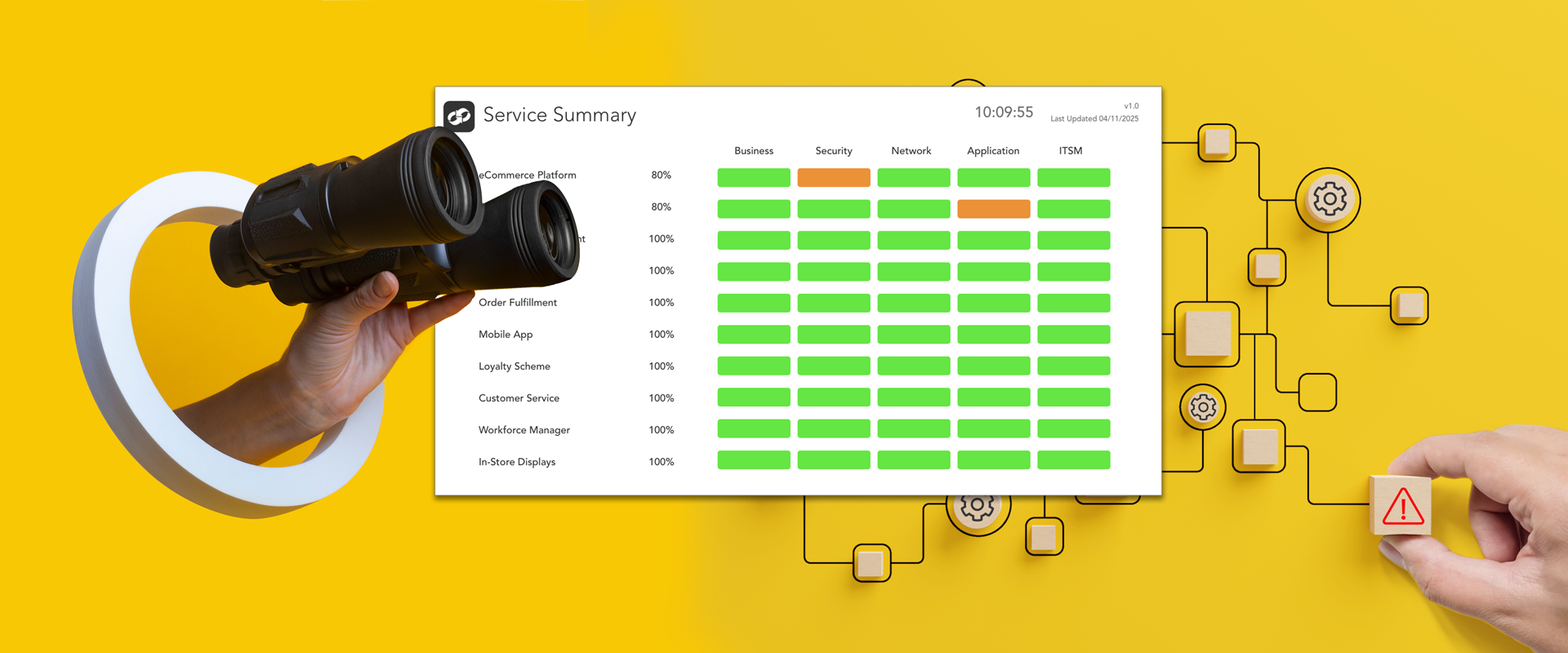
In practice, the best solutions help teams monitor service health and security posture together, so they can understand whether a technical issue is also a customer, regulatory, or business risk.
Customizable
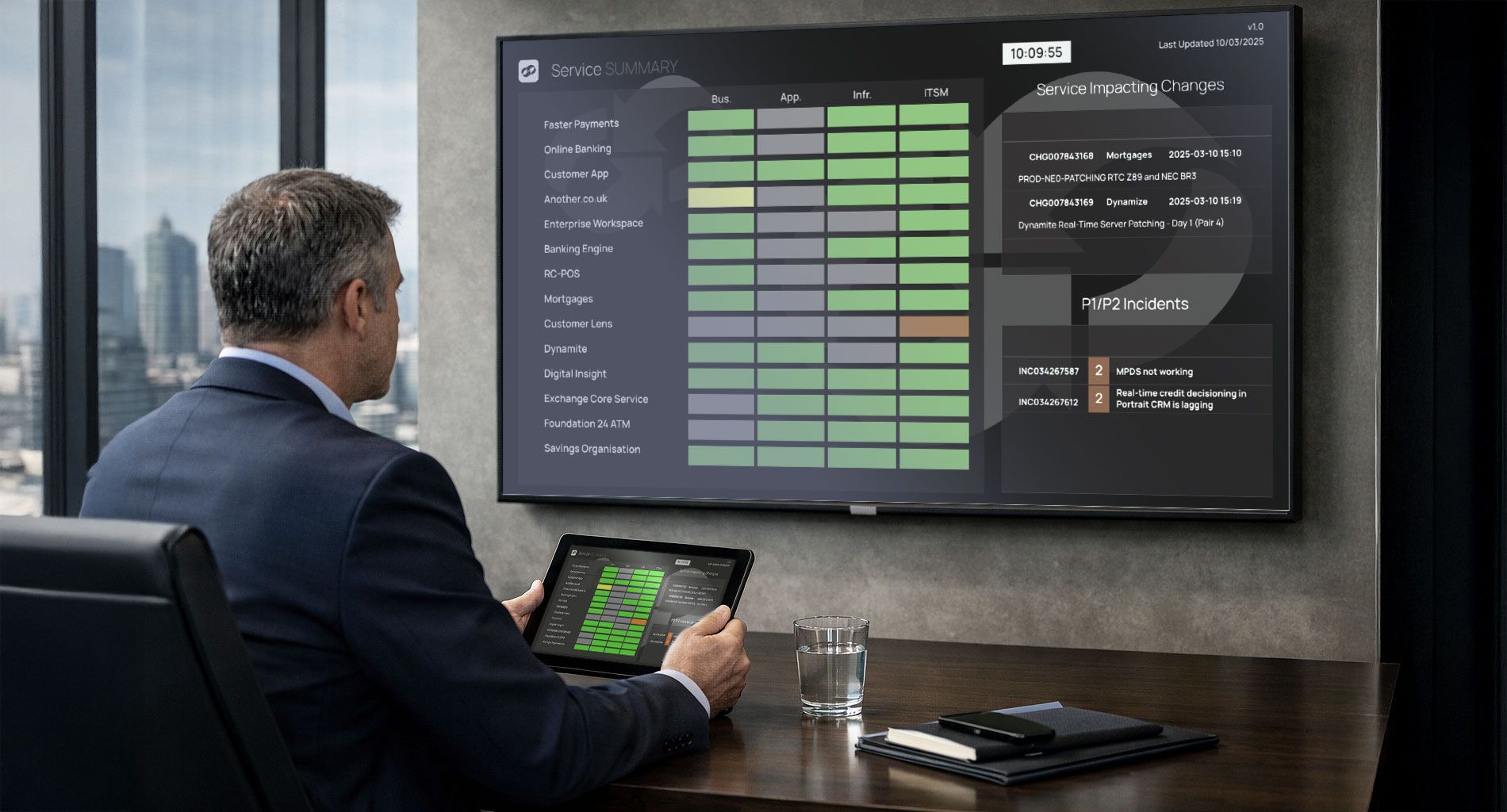
dashboards and alerts are equally important. In very large environments, one fixed view is never enough. Teams need self-service dashboards, role-based access, reusable templates, live updates and alerting that can be tuned by business service, geography, customer journey, support team, or SLO.
They also need the freedom to blend service health, incident, change and security context in one place. That is where Observability becomes more than monitoring and starts becoming an operational decision platform.
Interlink is built for enterprise-scale
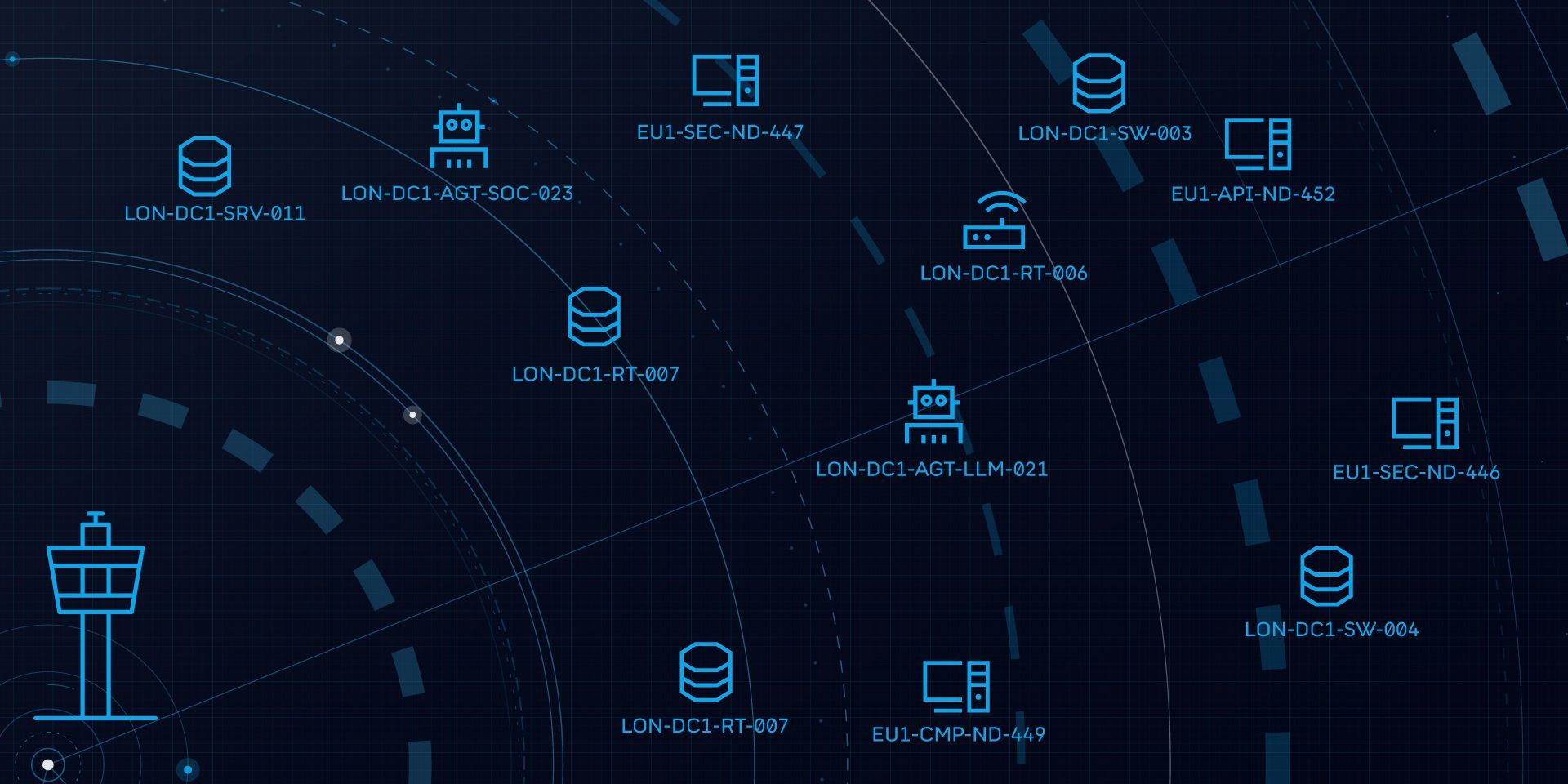
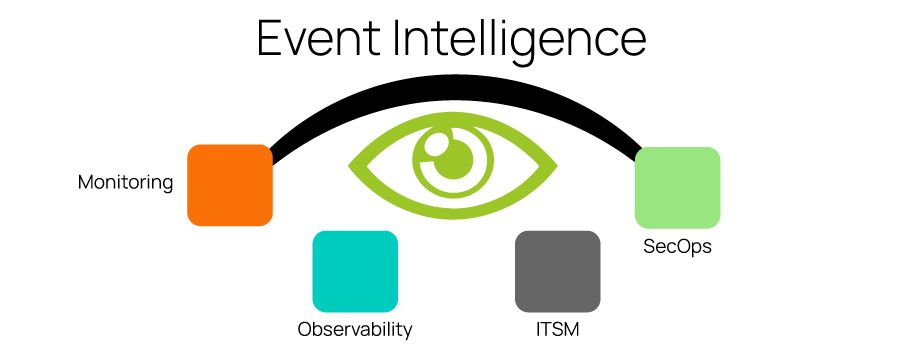
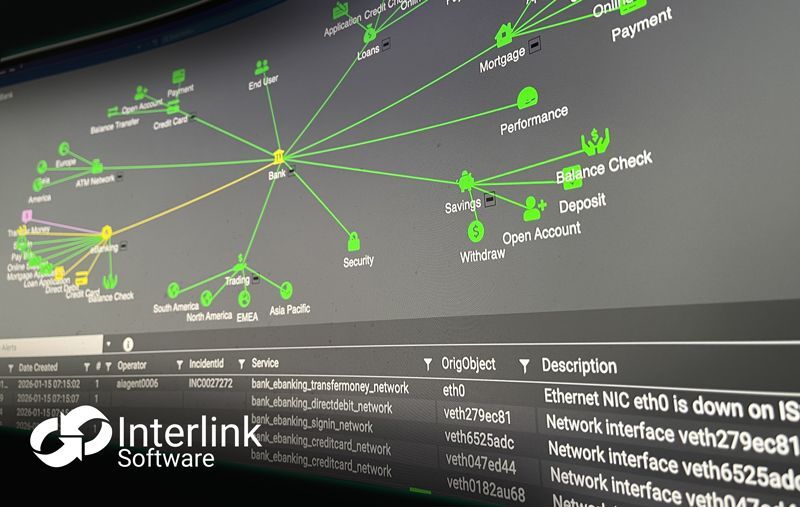
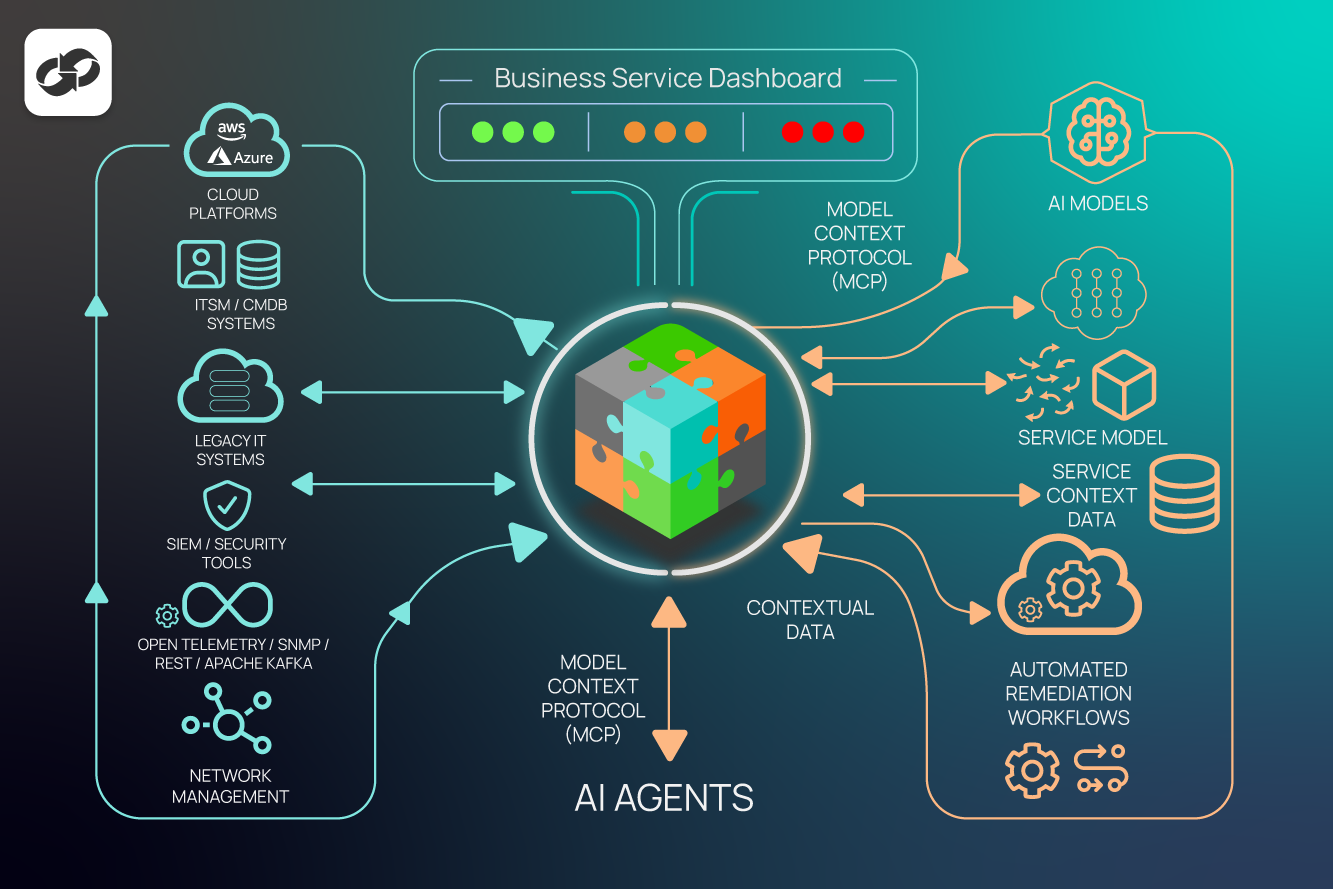
Service Observability and Explainable Event Intelligence. It sits above existing tools as a universal, enterprise control tower spanning IT, security and business teams, helping protect service availability without forcing a rip-and-replace approach.
Interlink correlates signals in real time, supports SIEM and ITSM integration, enables
Service Chain Mapping for strengthened operational resilience and compliance and uses machine learning, fuzzy matching, knowledge graphs and automated remediation to accelerate root cause analysis and response.
Increasingly, that
enterprise control tower must extend to AI as well.
Interlink’s direction in Agentic AI and Model Context Protocol reflects a broader enterprise need: grounding AI-driven operations in trusted operational context.
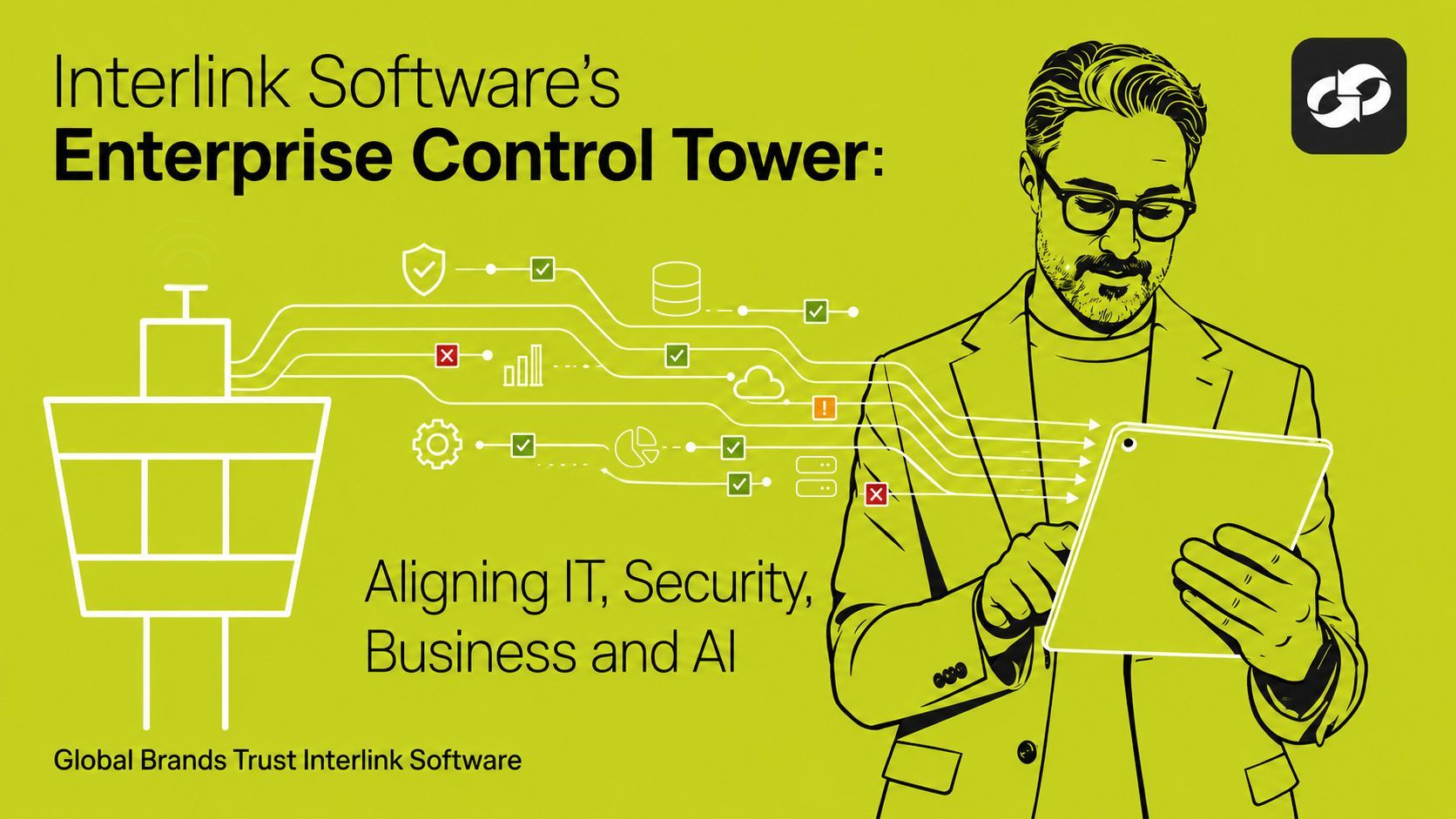
The result is a more universal model for modern enterprises: Interlink Software's Enterprise Control Tower: Aligning IT, Security, Business and AI.