Configuration Management – bringing infrastructure chaos under control

For IT teams it has never been an easy task to build and maintain an inventory of all the systems, software and hardware that organizations are reliant on to deliver their services and do something meaningful for the business with this information. As organizations grow they accumulate more and more asset and config data. Information inevitably ends up scattered across multiple, disconnected repositories; ITSM tools, service catalogs, software asset management systems, databases, spreadsheets etc.
Since the 80s the Configuration Management Database (CMDB) has been presented as the blueprint for understanding the IT infrastructure of organizations’ - a single source of truth for IT assets, identifying dependencies between components, a means of managing the business impact of change.
By the 2000s the CMDB had run aground on the reality of delivering it. Patchy monitoring coverage, out of date, inaccurate data (often manually maintained) devalued the CMDB, no more than an unwieldy, monolithic dumping ground for a static list of components.
Latterly digitization and new practices like DevOps have introduced even greater levels of complexity into the equation. Microservices, cloud applications, a plethora of new tools, all performing at lightspeed need to be managed. Stretched to breaking point, unable to adequately focus attention on threats to service, many IT professionals concluded that the modern enterprise was no place for CMDBs.
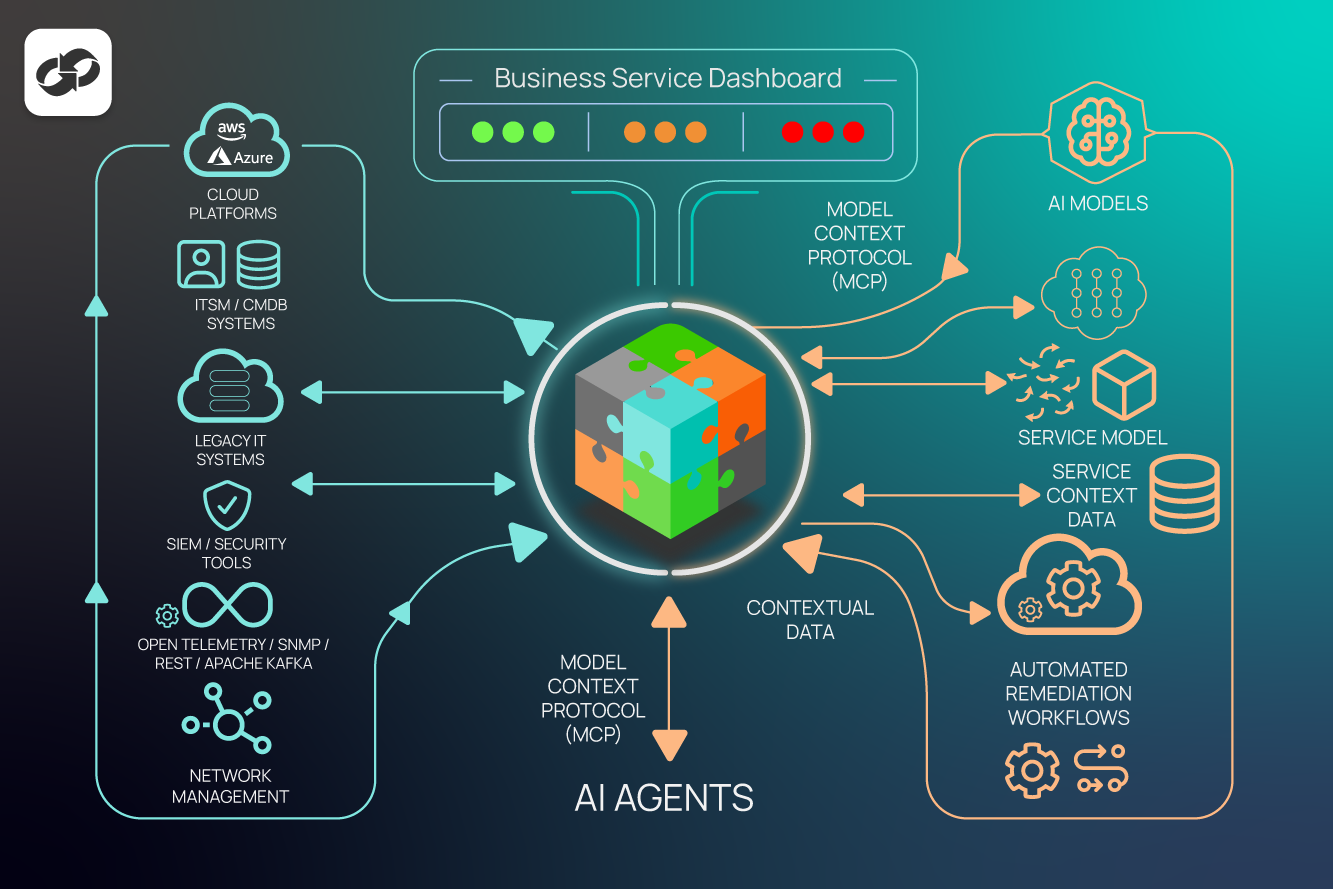
We believe that the CMDB still offers immense business value, it’s just a matter of how you go about it. First off, whether you come to us with an immature CMDB, or no CMDB at all, we remove the costly burden of building and maintaining a monolithic database. Driven by universal integration and service visualization capability Interlink’s methodology serves to aggregate data from disparate sources, populating a virtual CMDB – without data leaving its originating repository.
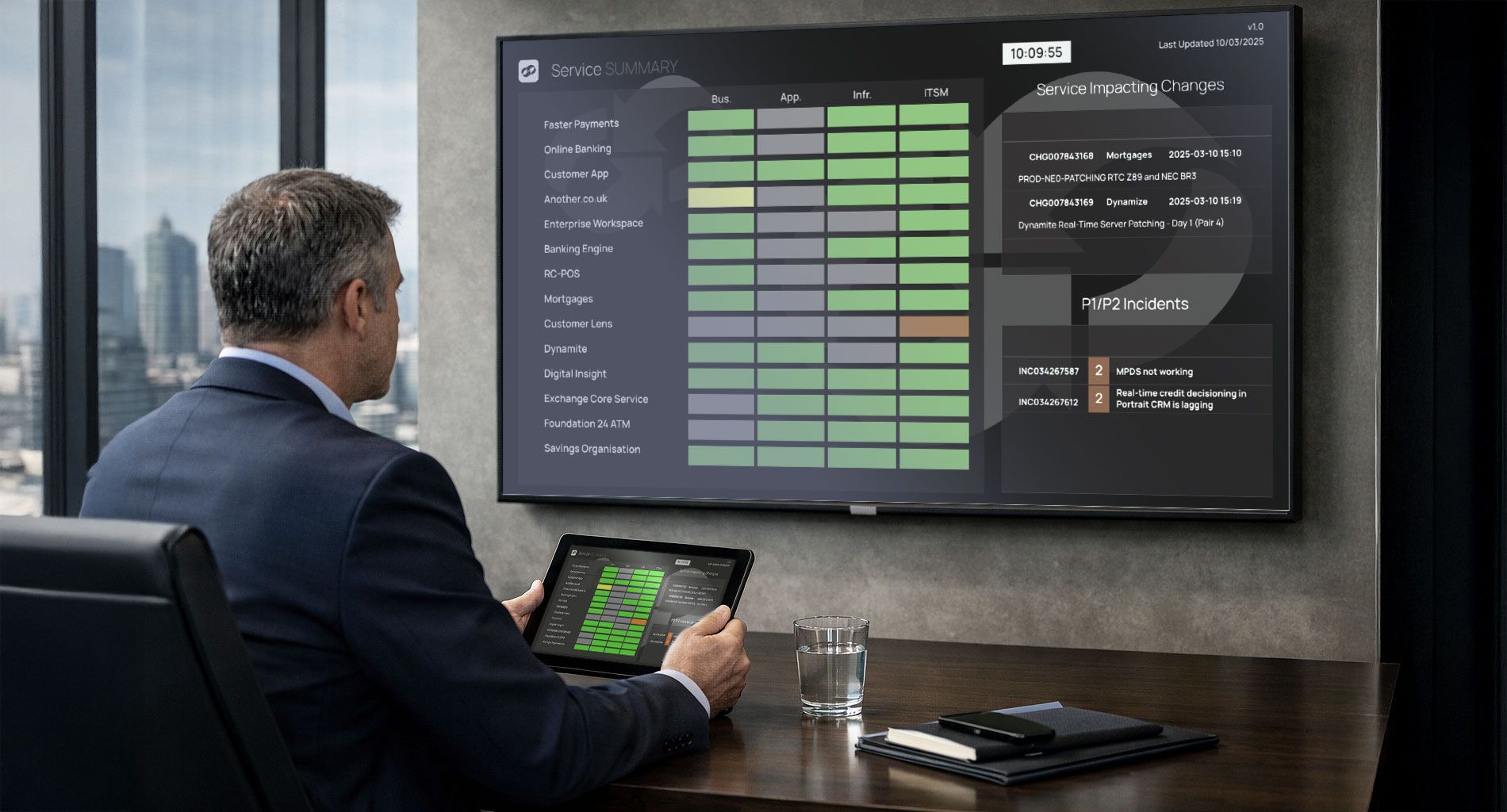
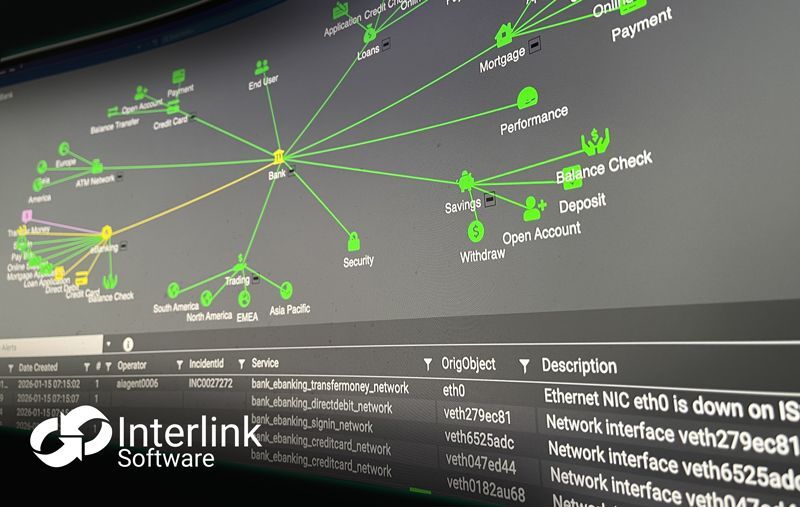
In a single platform, we lay out the foundations for a whole host of benefits. Service mapping and modeling deliver IT Ops with easy to explore, single-pane-of-glass, views of the topology and state of the entire infrastructure - correlated to service impact. Change analysis helps avoid changes that might conflict and pose a risk to service availability. Driven by machine learning, the provision of actionable intelligence on technology performance speeds up the process of pinpointing and addressing issues.
Transform the management of IT resources, overcome the hazards of poor visibility - move to a centralized, service-centric approach to configuration management