Getting Started with Single-Pane-of-Glass Service Health Dashboards
Adam Smith, Senior Pre-Sales Engineer, Interlink Software, talks through the tried and trusted approach we take when implementing Single-Pane-of-Glass Service Health Dashboards.
Adam Smith , Senior Pre-Sales Engineer, Interlink Software, talks through the tried and trusted approach we take when implementing Single-Pane-of-Glass Service Health Dashboards.
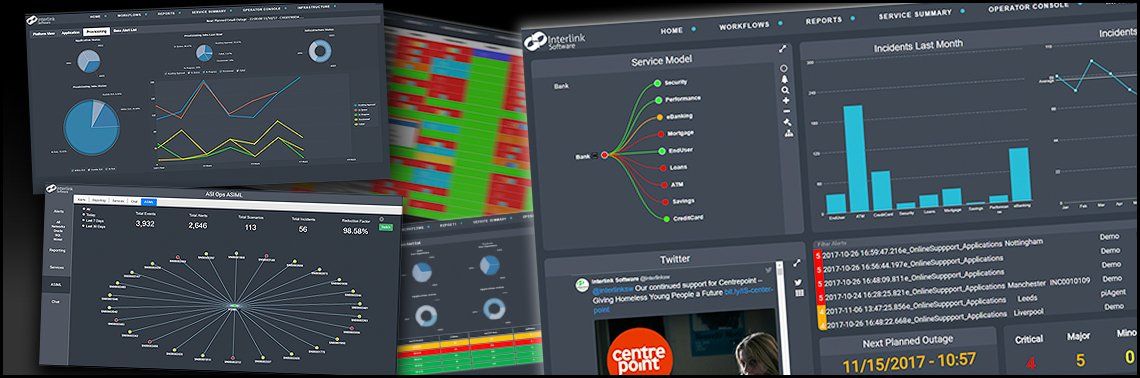
Moving to Single-Pane-of-Glass service health monitoring, getting away from reactive, technology/component-based service health monitoring to a proactive, predictive approach is a new way of working for most of our new customers. (Watch a brief video about how Nationwide Building Society did it HERE.)
On-boarding a new customer and deploying accurate, meaningful dashboards is NOT just about the technology. People make it happen!
And as a project lead it’s my job to work effectively with everyone involved and bring all the information together that we need to bring their dashboards to life.
Top-Down – Getting to Know Your Services
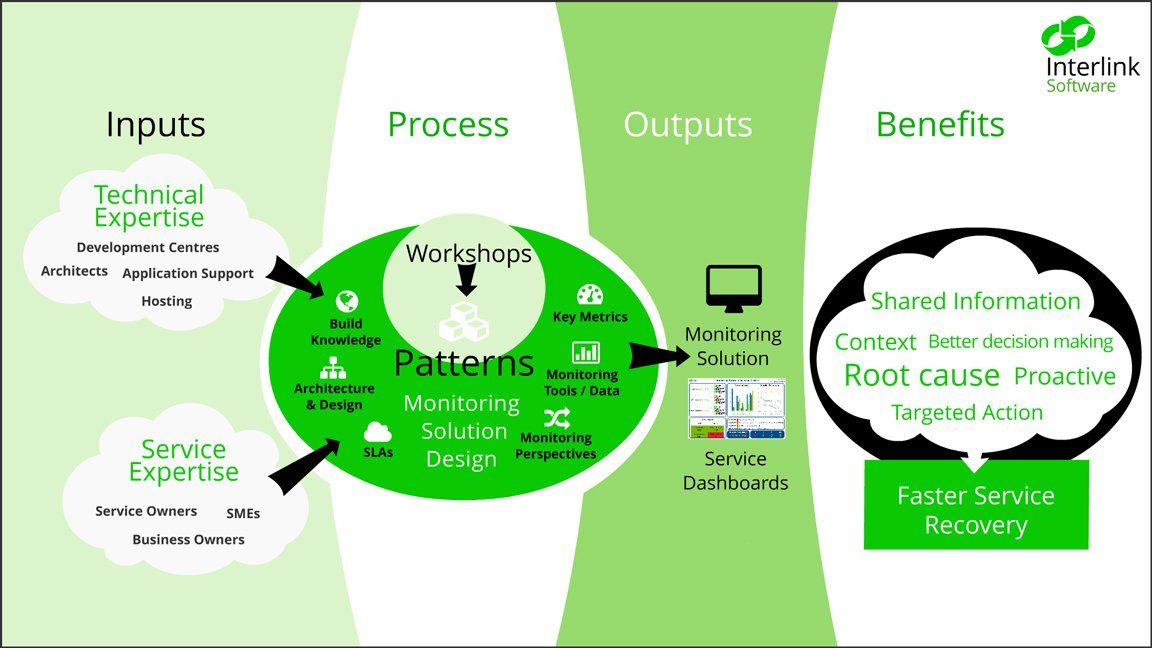
At the beginning of the journey, we spend a lot of time to engaging with the customer’s different teams, the people with the knowledge and expertise in the services and technology underpinning their services. After all the customer knows their environment more intimately than us.
We undertake Service Discovery and Service Modelling workshops with everyone from senior management, the service owners within the business, to those at the front-line of IT operations, technical people 2nd / 3rd line. All contribute to bringing the dashboards to realisation.
Customers have lots of different data and information in different places. We gradually build up a picture of everything that will feed in to and maintain the Service Models that will ultimately drive the dashboards.
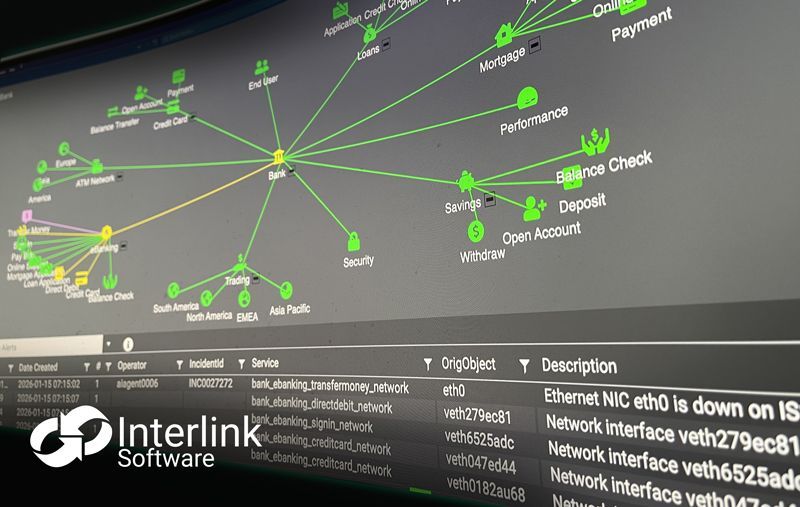
We systematically define and document the following to fully understand the topology of the customer’s environment –
- Service hierarchy – the infrastructure relationships and dependencies
- Data sources and integrations (monitoring tools/Service Desk systems etc.)
- Viewing and reporting requirements for operations and beyond
- Backup and recovery considerations
- Failure/degradation considerations and breakpoints
- All the key metrics which represent the health of the service
Grand (Dashboard) Designs
Running dashboard design workshops is next up once we’ve got all the aforementioned outputs documented.
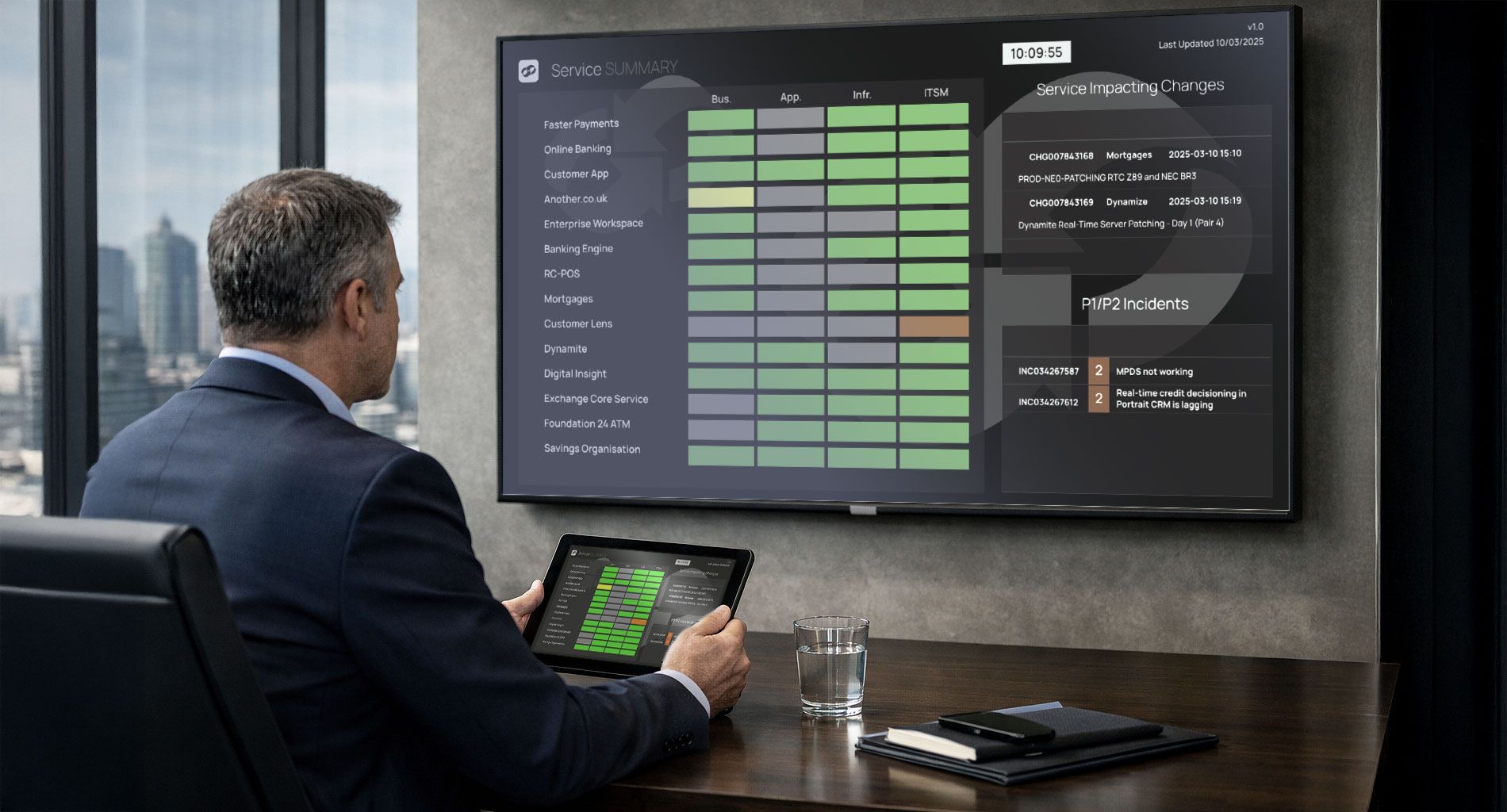
We’ll look at all the key data and metrics which need to be displayed in the dashboards and create a blueprint – aligned to what the dashboard users need to see – in order to understand the health of their services in a meaningful, business-centric format.
In at the deep end, we’ll perhaps start out by creating dashboards for the client’s most important, often most complex services. With a retail bank, it might be their online banking service. A retailer, it might be their logistics systems. A utilities sector client, their metering systems.
Enabling Self-sufficient Customers
Essentially everything I’ve described up there represents a hands-on, continuous dashboard creation training programme for the customer.
Once they’re up and running we typically leave the people who “own” the dashboards with all the knowledge and skills necessary to design, build and roll-out new dashboards (say for new services that come online) – as required (if they wish.)
About Adam
Adam has 12 years’ pre-sales and consulting experience – delivering and managing large scale IT Operations Management projects all over the world.
Let Us Show You …
Request a demonstration of Single-Pane-of-Glass Service Health Dashboards HERE