Beyond Traditional Observability: Turning Technical Insight into Operational Intelligence
Observability has become a central part of modern IT operations and for good reason. Metrics, logs and traces give technical teams detailed evidence about how applications, infrastructure and services are behaving. Such evidence helps them investigate performance degradation, identify abnormal behavior and understand what changed around the time an issue occurred.

For engineering,
DevOps and
SRE teams, this visibility shortens the distance between a symptom and its technical cause. Instead of relying on assumptions or waiting for users to report a problem, teams can work from current data and investigate issues much closer to the point at which they arise.
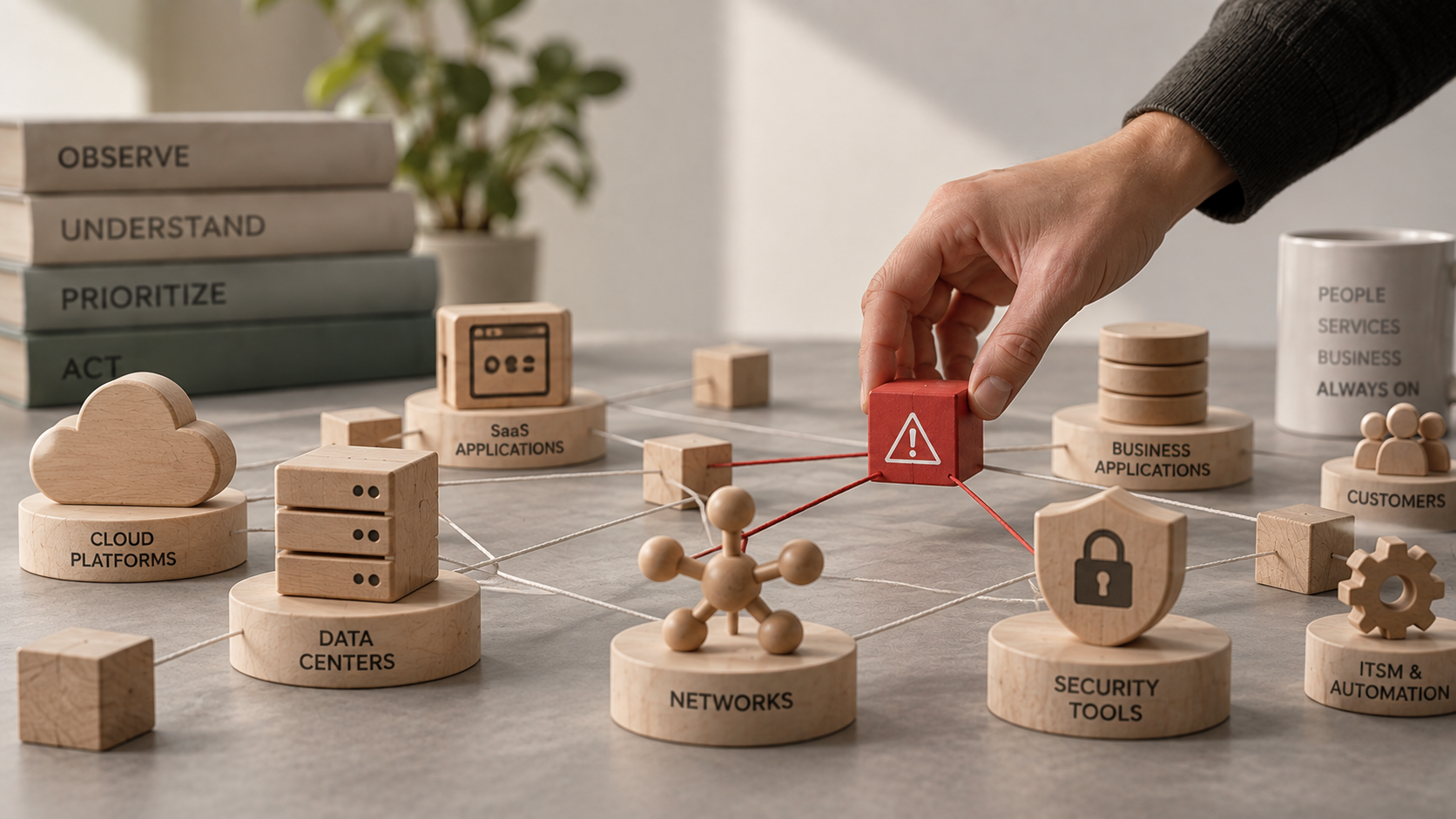
The challenge for a large enterprise is that this technical view is seldom the whole operational health picture. Over time organizations accumulate a broad mix of monitoring and observability technologies across cloud platforms, applications, networks, security systems, legacy infrastructure and specialist business services. Those tools provide depth within a particular domain, but they also create separate, fragmented views of the same environment.
An application team may see an increase in response times. A network team may see packet loss. A security platform may identify unusual activity. ITSM may already contain a related incident or change.
Each signal can be accurate, while still leaving teams to work out how the pieces fit together and might impact on a critical service.
Beyond the technical view
Observability can show what is happening. The next step is understanding what it means across the service. Traditional observability is primarily concerned with making system behavior visible.
Operational intelligence asks an additional set of questions: which events are related, what Business Services do they affect, where do the dependencies lie, how significant is the impact and what should happen next?
From the business perspective, individual components matter less than whether the overall service is working. A payment service,
retail transaction or booking process may rely on many different systems working together. A problem in one area can therefore have very different significance depending on the service it supports.
A database issue supporting a low-use internal application is not equivalent to the same technical condition affecting a high-volume customer service. The alert may look similar. The operational consequence may not.
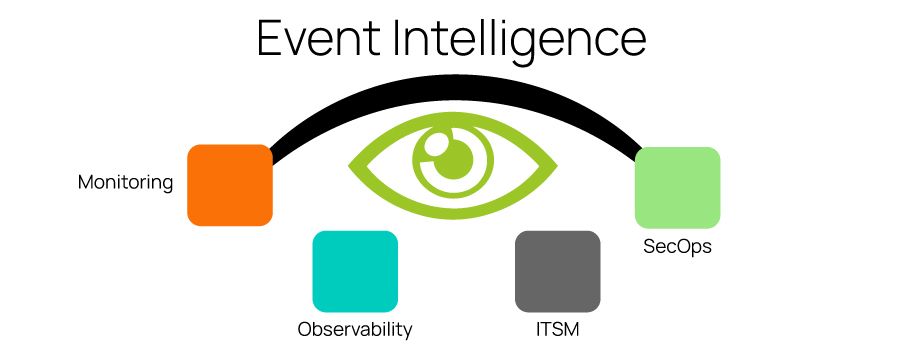
Interlink Software takes the information already produced by monitoring,
observability, ITSM,
SIEM and other operational systems and makes it more useful across the wider enterprise.
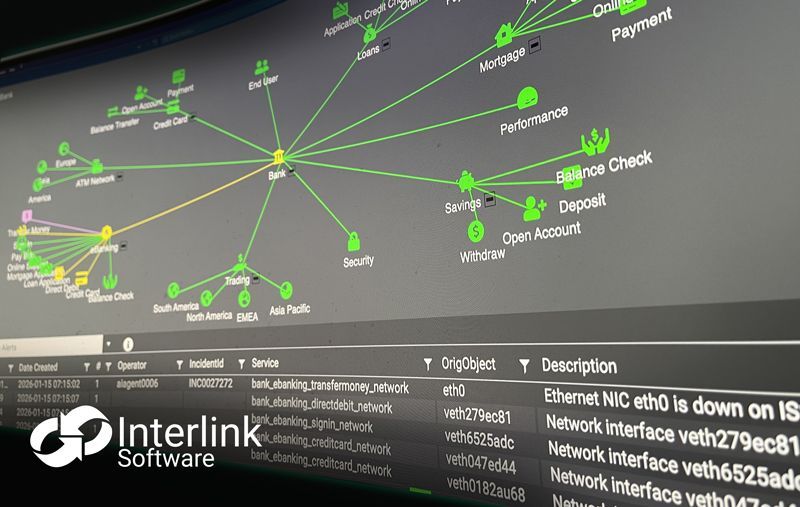
Rather than replacing those investments, Interlink operates as a vendor-neutral layer across them. Events and operational data from multiple sources can be consolidated, correlated and related to service models, helping create a more coherent view of what is happening across complete Business Services rather than within individual tools.
The value is not simply in bringing data into one place. It is in improving the quality of the operational picture.
Correlation, machine learning, temporal processing, fuzzy matching and knowledge graphs can help identify relationships between events that may otherwise appear unrelated. Service context can then explain what those relationships mean operationally, reducing the manual interpretation required when several teams are looking at different symptoms of the same issue.
Building a shared operational picture
Different teams naturally approach service health from their respective, specialized perspectives. Infrastructure teams are concerned with the underlying estate. Application teams focus on application behavior. SecOps has a security perspective. Service management works with incidents and changes, while service owners are concerned with whether the service is available and supporting the people who depend on it.
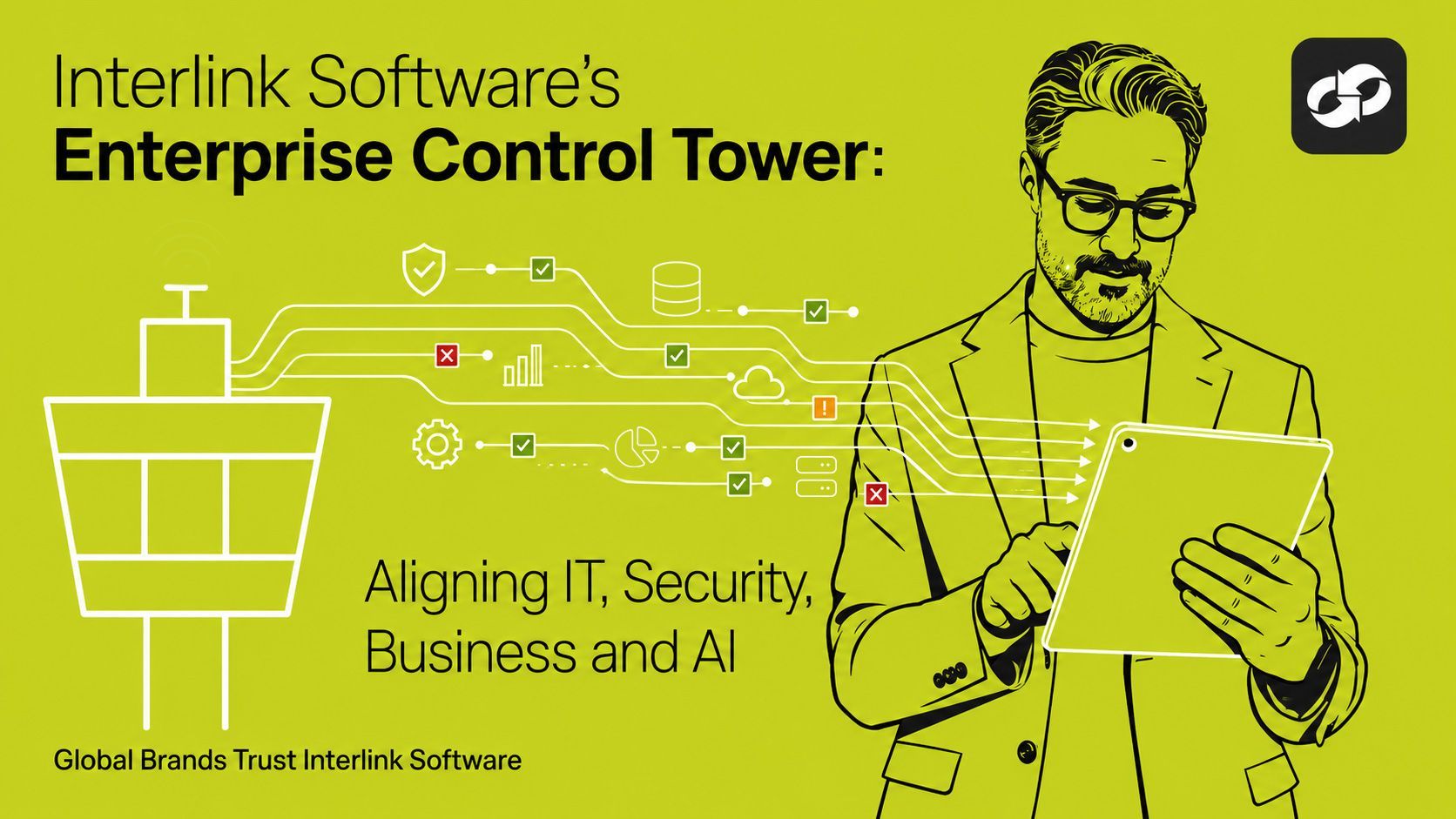
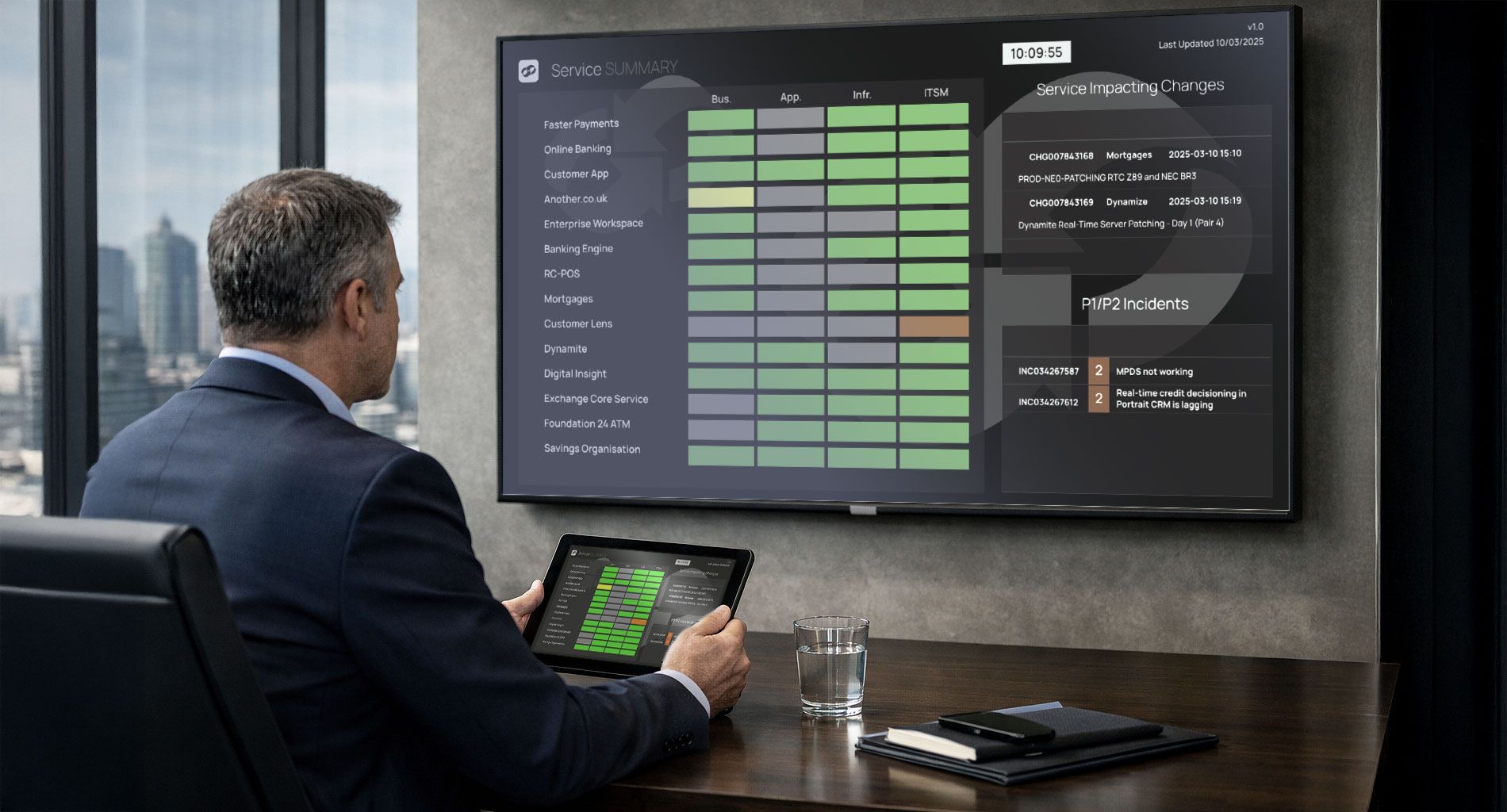
Interlink’s Enterprise Control Tower has the purpose of providing a common operational layer across these perspectives. By bringing intelligence together across sources and aligning it to Business Services, organizations can move from multiple independent technical views towards a shared understanding of service health, dependencies and impact.
Clean, trusted data also matters. A large enterprise may have gaps in its CMDB, incomplete dependency information or automation that has evolved across different platforms over many years. Service models therefore need to be informed by current operational data rather than relying solely on static records.
Bringing telemetry, topology, service relationships, historical context and operational events together can support faster investigation, more informed prioritization and better coordination because teams are working from a common set of facts.
Adding another source of telemetry does not necessarily address fragmentation if the resulting information remains confined to individual tools or technical domains. The greater value comes from establishing relationships across that information and understanding what it means for the services the organization is actually trying to deliver.
Where AI-Ready Operations fits into the picture
AI assistants and agents can search data, summarize incidents, correlate signals, recommend actions and, within the right controls, participate in operational workflows. But the quality of those actions depends on the context available to them.
An AI agent may identify a technical anomaly, but useful operational action requires more than recognising that something changed. It also needs to understand which service is affected, the relationships involved, the likely business impact, relevant history and the rules governing what it is allowed to do.
Beyond traditional observability, to a trusted operational foundation
Interlink’s approach is to provide service-aware context that can be used by people, workflows and AI, supported by governance, automation and central rules and guardrails. The operational intelligence layer therefore becomes more than another dashboard. It gives AI access to structured, relevant information rather than asking it to search fragmented telemetry across multiple independent systems.
Detailed observability data remains fundamental to understanding how modern applications and infrastructure are behaving.
For large enterprises, though, the greater value comes from connecting that technical evidence with service relationships, operational history and business impact. Doing so is becoming increasingly important in protecting critical Business Services, reducing the risk of damaging outages and limiting the impact on customers when disruption does occur.